Nobody Has it All – But It’s Possible to Have a Family and Rewarding Career

A recent article in The Atlantic by Anne-Marie Slaughter entitled “Why we Still Can’t Have it All” has garnered considerable attention and controversy on the net.  I’ve been meaning to comment – frankly last week was too busy – now that I’m on vacation for a few days I wanted to reflect on this as it’s a topic near and dear to my heart.

The author starts with an example of a work/parenting dilemma that she faces – she is in a very high-powered position which has taken her away from her children, and she’s not living with them during the week.  One of the children is going through some normal but stressful adolescent challenges and she is feeling quite torn being far from him.  As a result she gives up the “high-power” position for what she considers to be a “non-high powered” position as a tenured professor at Princeton.

The fundamental problem is that she postulates a “have it all” fantasy which implies that life has no limits or tradeoffs.  There are no constraints of space nor of time.  Of course problems in life occur because these constraints exist. And, by the way, they exist for both men and women.

Tradeoffs exist and choices must be made in all parts of life.  We are always making these choices with regards to where we spend our money – home, education, necessities, splurge items, etc.  I can’t have it “all” and must make tradeoffs even though I am quite lucky and have all that I need and much that I want.  Similarly with food – moderation, balance and a bit of self-discipline are key.

Time is no different – it is not limitless.  For women and men who want to have high-powered careers and be an involved parent – especially during the busiest parenting years, that will probably be about it on the big time commitment front.  Those two activities are consuming.  Personally I didn’t find this a huge loss.  My career and children were so rewarding that the clubs and non-profits – while worthwhile – were skipable.  Social life also is more limited than for someone who isn’t balancing both family and career.

How high-powered is high-powered enough?  Just because being a tenured professor at Princeton is not high-powered enough for Slaughter doesn’t mean that that logic should be applied to all women – I suspect that it would be seen as a pretty awesome level of accomplishment for most.  But even if not – maybe it’s a matter of timing.  Skills and opportunity aside, I’m not so sure I could have juggled being CEO of SugarSync 15 years ago with 4 young children.  That’s ok with me – I’m enjoying doing it now.

What about business travel?  That is where the rubber meets the road (or more accurately where the s—t hits the fan) for many working parents.  I did find this very challenging – I had international responsibilities for much of my career.  In some cases I took the kids.  I couldn’t fathom living apart so moved them with me to Brazil.  When they were infants I took them with me on business trips.    Beyond this my husband and I tried as best to juggle our trips such that we weren’t both gone at the same time and when we were, we were lucky enough that my mother-in-law (expert work/family juggler herself) was able to take care of the kids for us.  I know many successful professional women who made medium-term job choices to limit travel.  Certain professions (e.g., management consulting) have so much travel baked in that perhaps bigger changes are needed, though I know of many successful management consultant moms who take short term research assignments or focus on local clients.

The point that I hope is coming through here is that much is possible.  It takes tradeoffs, some number of years of less than ideal amounts of sleep but, in my opinion, the rewards are worth it.  Some situations seem to go beyond what feels like possible.  Slaughter’s situation of living apart from a teenager feels impossible to me – I certainly couldn’t do it.  I certainly don’t know if there were other solutions she could have explored.  Could they all have moved to Washington? That might have worked on the family connection but not for the children’s school – I don’t know.

But what I do know is that for our family that situation is not a gender issue.  I cannot imagine my husband being able to live apart from our kids for more than a few months.  He did it when we were in Brazil and that was very difficult for our family.  I knew when I went there it was not long-term without him.  Both my husband and I have been contacted by recruiters about some jobs in LA that would require commuting and being home only on the weekend.  We turned them down without much remorse, confident that we could find something we enjoyed close to our children.  I do not find that the absence of some extreme choices has overshadowed the many choices and opportunities I’ve had.

None of my views on the above changes my opinion that there are still barriers that should not exist and changes that should be made.

Childcare is a huge issue – both availability and cost.  When I started my first job at Informix and Steve was in Law School >50% of our after-tax income went towards childcare.  Things were pretty tight!  I agree with Slaughter’s point about re-valuing facetime.  The work/family juggle is made more doable if you can finish up a project at home after the kids go to bed rather than in the office from 6-8.  More women in leadership? I agree with that too (no surprise).  Policy and management changes to support this juggle are important to both men and women.  I don’t see that as a women’s issue but rather a family issue.

One other place where I take strong issue with Slaughter’s recommendations is around timing.  Yes, I think we should take the long view of careers and I recognize that we will likely work longer and that there are differing stages of one’s career where one may be more “pedal to the metal” than others.  The one place were we tend to have less flexibility though, is timing of having children.  I’ve seen way too many women friends and colleagues who decided to wait, have to put their bodies through a hormonal wringer or, worse, suffer heartbreak and disappointment in not being able to have any or the number of children they want.  Partnership or tenure or VP jobs can be done later with perhaps some extra sweat equity.  Women’s bodies are simply less flexible on this.  Loss of fertility is quite dramatic in the early 30’s – see here and here. If a woman at 32 had a couple of children and was upset that she missed out on some key promotion – I would tell her to redouble her efforts, find a new company, start a company – basically the opportunity is still in front of you.  If that same woman at 42 had the plum job but wanted and was unable to have children, the only response would be one of consolation.

I do not believe early motherhood needs to be the death knell of one’s career.  At 30 a woman can easily have 40 more years of  her career in front of her – lots of opportunity to make up for any lost time.   I do object to the focus on youth accomplishments – in part because it puts women in a poor choice situation.

It’s not easy nor as common as I’d like to see, but I don’t think the women who are both mothers and top professionals are, as Slaughter says, only those who are “superhuman, rich, or self-employed.”  If they are a top-professional, they may not be rich though they probably can afford good childcare.  Self-employment can be a great option but I don’t believe it is the only one.  I find that those women who do do both are determined to do both, a bit flexible and while not super-human, very hard working.  I believe many women can aspire to this combination.

India – Rich and Poor

My time in India was a harsh reminder of the problem of extremes of income inequality.  Of course this topic is a political hot button – especially here in the US around election time.  The issue in India feels less political, however, and more in the realm of basic human rights and dignity.  The topic was brought into sharp focus on my first day.  Dell hosted our event at the new Leela Palace in Delhi.  It is safe to say that this was the most opulent hotel I have ever stayed in.  This view of the lobby is an example.   The Leela family clearly believe the adage that nothing succeeds like excess – there is a glorious excess of flowers, service, marble, gilt – you name it, they have it.

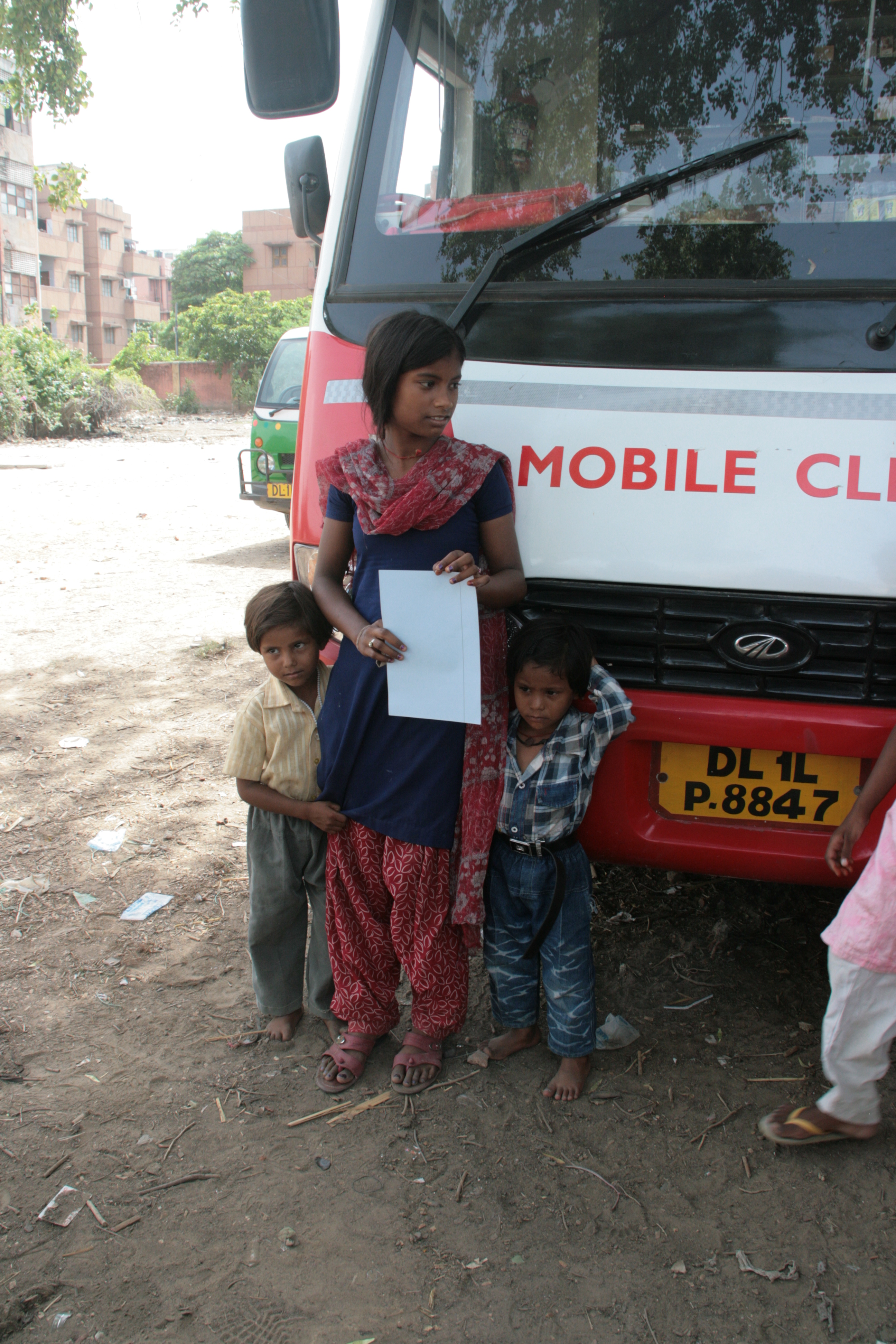
Our first afternoon I elected to join an optional program where we went with the president of Save the Children to learn about the mobile health program they operate in the slums.  They operate this program in the poorest slums of Delhi (and other cities) where people have the least access to health care.  We saw two programs that are part of Save the Children’s mission.  One is a mobile health van – literally a large van that goes to places without other medical care – on board are a doctor, pharmacist and nurses.  There is a mini lab as well as exam room.  They also run educational programs where they “train the trainer” – children and adults to educate peers about sanitation, nutrition etc.

The slum where these programs were taking place made the Favelas I had visited in Brazil during the 90’s look like luxury condos.    Sanitation was poor – a single non-functional latrine for an entire neighborhood.  Water was not safe to drink.  I’m sure the vast majority of the illnesses being treated stemmed from the poor water and sanitary conditions.  According to Save the Children, 50% of children in India suffer from malnutrition.  Look at the two children in this picture – these children appear to be 2 and 3 – they are 5 and 7.  And they don’t catch up – this degree of malnutrition will handicap these children and the society that needs to support them – for life.  Save the Children has a pragmatic program – focus on exclusive breastfeeding for the first 6 months and food supplementation programs for the first 3 years.  That is the most leveraged use of their resources and I admire their pragmatism.  It is hard for them to have to allocate their resources so carefully – after all proper nutrition for children of all ages should be viewed as a basic human right.

We hear about the growth in the Indian economy – all of the brilliant software engineers, outsourcing companies etc.  India is actually a net food exporter so malnutrition today (unlike 30 years ago) is not a lack of food but of money.  Inequality in earnings has doubled in India over the last two decades, making it the worst performer on this count of all emerging economies. The top 10% of wage earners now make 12 times more than the bottom 10%, up from a ratio of six in the 1990s.  By contrast In Brazil, household incomes have been growing faster among the poorest households than among the richest for the last two decades.  India spends less than 5% of its GDP on social welfare as compared to Brazil’s more than 15%. Its tax revenue as a proportion of GDP is under 20%—the lowest of all emerging economies, and just half that of developed countries.  This is not the path towards improvement.

There are bright spots.  My visit to Hyderabad was exciting – a high-tech oasis in the midst of all of this.  Many busy office towers, thousands of educated, bright engineers and business people working on cool technology.  But I question if things are structured for these bright spots to pull up the laggards in the economy.  There is a growing middle class – about 5% of the economy in 2007 according to McKinsey and Co but the poverty is overwhelming.

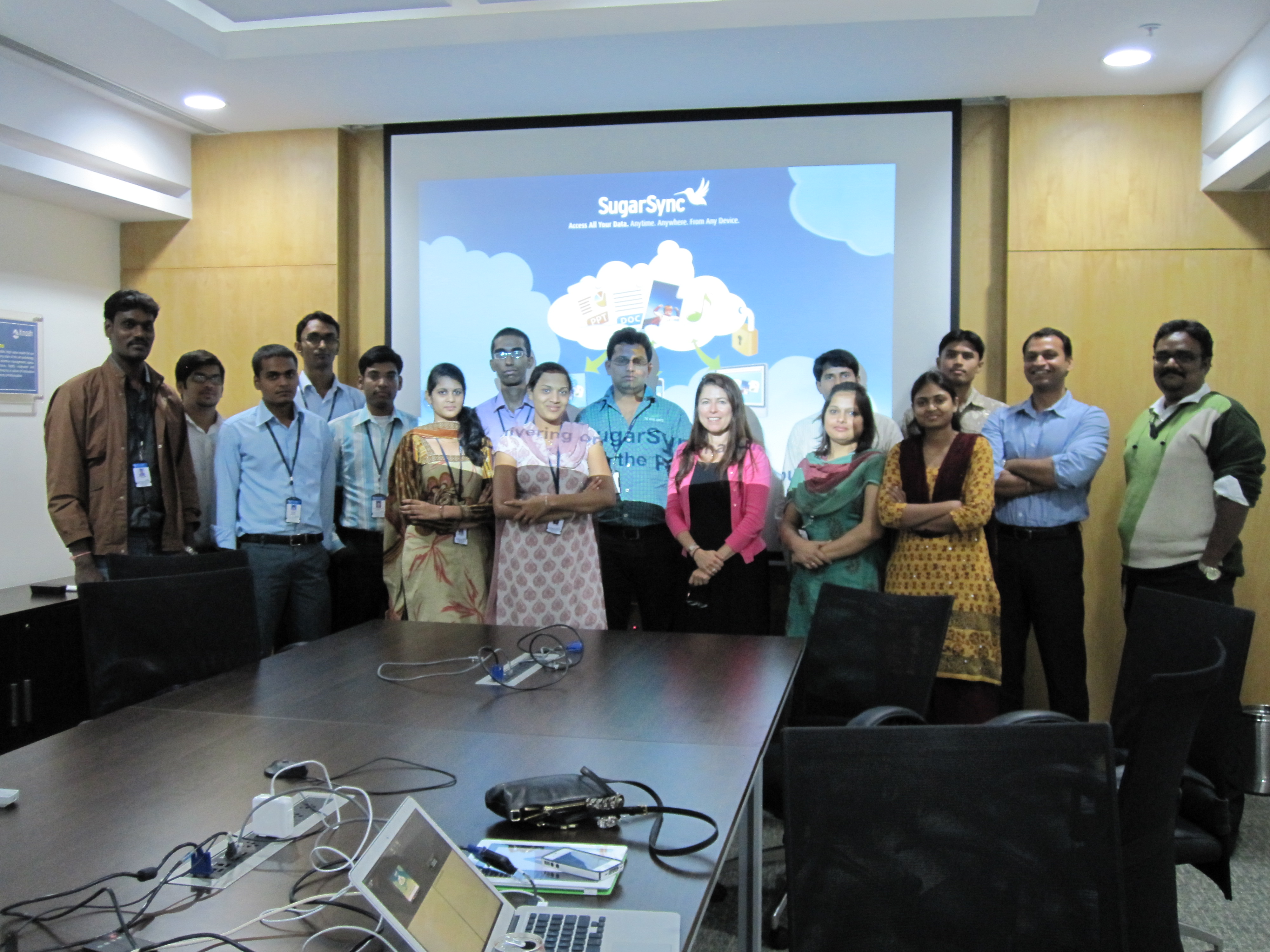
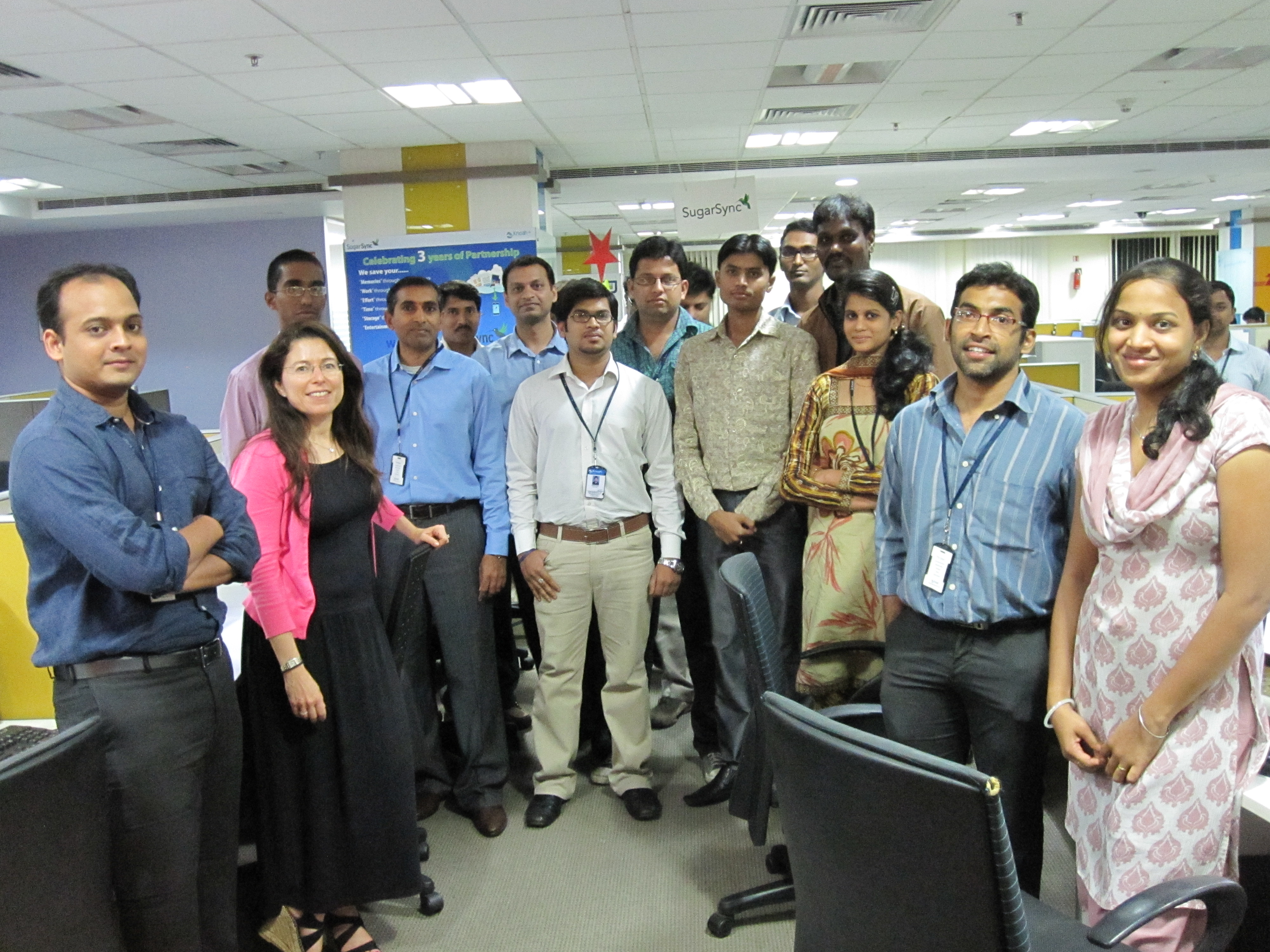
Apologies in advance to readers if this is too much of a rant.  I think it is probably for the best that I left my internship at Agency for International Development (A.I.D.) in Washington in 1986 to go to business school – I would be ranting every day if I worked full time in the development economics field knowing these realities.  On the other hand technology companies such as SugarSync can be part of the solution.  We employ 30 people which has its own small multiplier effect.  It was exciting to do a training program for the team  and see their excitement about our software and working with our customers. I’m looking forward to going back for a more extended trip to learn more about the business climate and other parts of the country.

India, A Sensory Indulgence

I was invited by Dell to participate in their annual Women’s Entrepreneur Conference in Delhi. I’ve always wanted to visit India – I’ve traveled very widely (more than 40 countries) so for me not having been to India – it was a real gap. In addition to the conference, SugarSync has a support team in India and I’ve been wanting to meet with them – we just doubled the size of our team there so timing was good. The business content of the trip was great but I wanted, first, to write about my impressions of India in general.

Despite lots of descriptions from my Indian friends as well as friends and family who have visited – it is hard to anticipate the experience. It is almost as if each of the senses has been tuned up several notches.

For me it started with the visual – the brightness of the colors of the clothing and jewels. Not just the beautiful Sari’s worn by the wealthy – bright colors are the norm for all women. And not just the colors, but adornment with sequins and beads – nothing succeeds like excess. Adornment does not stop with clothing. Many of us had our hands painted with henna and were affixed with the traditional red dot on our foreheads.

I’ve always loved Indian food – the huge variety of exotic spices did not disappoint. The aromas accompanying the food were just as wonderful. And good news – apparently turmeric is an antioxidant. I finally had a chance to listen to Indian music during dinner my Wednesday evening. I found the alternate tonality almost assaulting to the senses. It’s interesting how we are conditioned to certain tones but despite the conditioning I found the Indian music quite evocative.

Another extreme was the temperature.  Many people told me that June in Delhi would be extremely hot.  Right before I left I had a conversation with a friend and former colleague – after he gave me the usual admonition about the heat I replied that I was used to traveling in the heat – after all I had hike Masada (Israel) in the summer.  He laughed and said that this was hotter – and yes in fact – the temperature hit over 45 degrees celsius – about 115 fahrenheit.

Despite the heat – we had a great time sightseeing before the conference started.

Training for Mt. Whitney

I’ve blogged in the past about my morning workout – hiking with friends outdoors.  And now that we’re in the nice summer weather it’s been great to spend more time outdoors.

I wanted to have a goal in my exercise program and inspired by a lecture given by Alison Levine  my husband Steve and I decided to set our goal as summitting Mt. Whitney.  A little bit about Mt Whitney is here.  It is of course the highest peak in the contiguous US at  14,500 feet.  Interestingly, during the summer months, when the snow is melted, it is considered not to be a “technical climb”.  Trail head to summit is 11 miles each way with an elevation gain of about 6000 feet.

As much as I like hiking, my Great Neck (Jewish American Princess HQ) origin didn’t lead me to be big on camping.  Hike hard outside during the day then sleep/shower indoors is my preference.  It turns out that Mt. Whitney can be done as an extreme day hike lasting about 18 hours.  It is easier to get permits doing the day hike and the whole process is simpler in terms of gear and supplies.  So that’s our plan.  Getting permits is actually a democratic lottery system.  We applied and got our second choice date – July 31 – very lucky.  We particularly wanted this date as it directly follows our family vacation where we will be in Colorado for a week.

Now that the wedding has passed we are training more seriously – trying to step up our regular workout schedule.  Adam will be joining us for the hike – he of course has the advantage of youth and is in the midst of summer football workouts.  All three of us need to increase the duration of our workouts and find some opportunities to workout at altitude.  My normal weekday morning hike is 3-5 miles and weekend is 6-7.  I’m trying to increase the weekday amount (more challenging with work schedules) and do at least one 10-12 mile hike each weekend.  One of our favorite weekend hikes is Windy Hill.  That trail is 6 miles and 2000 feet gain – usually takes us a little less than 2 hours.  Steve figured out that if we can do that 3 times in a row – it is a similar length and elevation to Whitney – though of course much easier by being at sea level.

Weight lifting twice a week is part of the routine.  My trainer Matt MacNamara at SterlingWins has me doing a fairly traditional set of strength exercises.  I’m trying to push this harder but mostly be more consistent. I’m not a huge road biking fan but to break up the hiking I’m trying to do one ride per week – we have a great 20 mile loop through Menlo Park/Portola Valley/Woodside that I enjoy.

I’ve always liked hiking in the hills near my home and in the mountains when I travel.  In future blog posts I’ll talk more about the specifics.  I’m really excited about this challenge.

Is the Cloud the Next Facebook in the Hype Cycle?

My first post on Huffington Post as appeared at http://www.huffingtonpost.com/laura-yecies/sugarsync-is-the-cloud-next-facebook_b_1568962.html?ref=technology

We’ve all seen technologies that get overhyped — built up beyond the reality of their impact. Some have argued that Facebook was overhyped, hence the reason for its current stock troubles. Inversely, others argue that Facebook has become so embedded in our lives that it is still underestimated compared to its long-term impact. I’ve often been asked if the Cloud is heading down the same path, and whether we think Cloud technology is overhyped. After all, the buzz around industry giants like Apple’s iCloud and Google Drive entering the Cloud market is loud, and that feels risky to some.

To set the stage let me first define what the Cloud is. The Cloud is a relatively new term for what we have been doing increasingly since the invention of the Web — using Internet technologies to do things (such as run applications or store data) that we previously did locally on our PCs. Companies such as SugarSync and Dropbox are providing tools that accelerate this shift through technology that more easily lets you use the Cloud in your daily life. And now that large players such as Google, Apple and Microsoft are entering the fray and imitating the innovators, there is more discussion about whether the Cloud is reaching the height of the hype cycle.

However, the power the Cloud brings to our daily life is actually quite understated. Yes, the excitement is great — but the reality is even greater. What we are seeing is the intersection and synergy of societal trends magnified by technological forces that, in a virtuous cycle, enhance those societal trends.

Read more here: http://www.huffingtonpost.com/laura-yecies/sugarsync-is-the-cloud-next-facebook_b_1568962.html?ref=technology

We’ve Come A Long Way

I was reminded of this fact by a posting that today (June 4) 1919 the US Senate passed the Women’s Suffrage bill.  Full ratification happened a little over a year later when the 36th state, Tennessee, ratified the amendment.  The suffrage movement started in 1848, led to decisive legislative change in 1920 and in 2012 we have more than 50% of the vote being cast by women.

I find it revealing to look back at the arguments made against women’s suffrage. The liquor industry campaigned against suffrage on fears that women would favor temperance. The manufacturing industry feared women would put into place expensive workplace safety restrictions. Women consistently support the health and well-being of their societies.  It’s interesting to note that Californian women took the early lead in the suffrage fight then helped mobilize the rest of the country.  In the end, it was the participation of women in the World War I effort that tipped the scales of public opinion in favor.

But the truth is that societal change takes time.  Women are more than 50% of voters and college graduates but still lag in economic participation.  Similarly we have a African-American president but blacks still face tremendous bias.  The lesson to me is that we are now in the details.  And the detail work can be hard and frustrating.  Further progress will not be a single dramatic act like suffrage or the civil rights act but education and clever tactics to combat insidious biases and eliminate the other cultural barriers.

I remember reading the biographies of Elizabeth Cady Stanton and Susan B. Anthony as a schoolgirl.  I find them even more inspiring now from an adult perspective – a great energizer for the work ahead of us.

It Gets Better (Or at Least Easier)

I had a couple of conversations recently that got me thinking about this topic and I wanted to share my experience. Inspired by the “It Gets Better” movement and idea – I thought it applies significantly to stages in life and that really knowing and internalizing that it does get better might lead people to different decision.

I was at an offsite business meeting recently with Drew Garcia (SugarSync VP of Product Management) and Jason Mikami (VP of Operations). It was a beautiful Friday morning. While waiting for the meeting to start we were chatting about the great weather and I mentioned that my husband and I had enjoyed the gorgeous morning by going for an early hike at the Stanford Dish. They both looked at me incredulously – how did we manage such a thing with the kids. By way of background Drew has two children – newborn and two year old and Jason has a four year old. They are both very busy – of course with their work at SugarSync, in addition, Drew’s wife works as a management consultant at The Trium Group, and Jason and his wife have an award-winning winery that they manage.

I assured them that Steve and I were not exercising together before work when our kids were little. Our mornings then, like their mornings now, were completely crazy just getting ourselves and kids out the door to work and school. What I realized is that since they are totally in the midst of this intensive parenting/juggling mode they can’t even imagine a future beyond it. It is such an immersive, consuming experience that I just think it is human nature to feel like it will go on that way forever.

In my case it wasn’t forever but it was a long time. My oldest son is 26 and my youngest son just turned old enough (16) to drive himself. With four kids and a big age range it has been 26 years of responsibility for kids that needed morning driving. No wonder it seemed like forever. And it was many years of juggling, lack of sleep, and rushing…all the challenges that working parents experience. But amazingly enough, I blinked and that time is nearly over. I’m lucky when I get a kiss goodbye from my son in the morning – he is super independent. And for many working parents who have their children in a shorter period of time, it goes by even faster. On the other hand, I feel like I still have a potentially long professional career in front of me. Both of my parents and my father-in-law are still practicing physicians in their 70’s. My Great Uncle retired from the law at 98! I hope that my best work is ahead of me. Bottom line, I’m looking forward to that work and am glad that I slogged through that time when the juggling meant very very little “me” time.

So this is a reminder, to those in the heat of it. It gets better, or at least easier. Stick with it – you have much to contribute not only to your families but professionally as well.

The Happiness of Pursuit

Despite their amazing foresight, I always thought the founding fathers were just slightly off when they wrote…we are endowed by our “creator with certain unalienable rights; that among these are life, liberty, and the pursuit of happiness”.  The problem is that I believe we get confused when we pursue happiness itself as a goal.  Typically we imagine some state of being – for instance being accepted to a certain school, living in a beautiful home or attaining a certain financial status as being synonymous with happiness.  It rarely is.

By contrast, working intensely on an interesting project, using your hard-earned skills to build something you are proud of – that can feel really good.  Doing it as part of a team of similarly skilled, committed people – that feels even better.  Sure you are pursuing a goal, hopefully a very worthy one – that makes the work even more gratifying, but you are not pursing the gratification itself.  Most of us typically find our gratification and reward in the work and the process.  That is what I mean by the “happiness of pursuit”.  Beyond family, this is what I believe truly leads to happiness.

Last week, at SugarSync I witnessed and participated in this pursuit.  Both the technical and business teams came together to prepare for an important demo for a prominent journalist.  The timeline was extremely aggressive and it was a real push to be fully prepared.  The team actually added components to make the goal even more challenging.  I couldn’t help but notice the buzz and excitement in the office – it was about working hard and seeing those results turn into something tangible and cool.  Interestingly this way overshadowed the specifics of how the meeting went.

I believe the best part of working in a startup is this happiness of pursuit.  The work is challenging, the contribution everyone is making is visible, the team is tight (no room for slackers) and the goal is clear.   Of course we want that work to be rewarded with a great financial outcome for the team but the day-to-day motivation has got to be from satisfaction and happiness in the pursuit of that outcome.

Career Choices and Insidious Bias

Continuing on the topic of the WSJ conference, I found one of the most thought provoking speakers to be Geena Davis.  She founded the Geena Davis Institute on Gender in Media http://www.seejane.org.   The institute describes itself at “the only research-based organization working within the media and entertainment industry to engage, educate, and influence the need for gender balance, reducing stereotyping and creating a wide variety of female characters for entertainment targeting children 11 and under.”   I found this work so interesting because it is directly related to two topics I’ve written about on this blog.  One is the insidious biases – these unconscious preferences we have and two – the lack of women entering the technology fields. This research uncovers a potentially major source of these biases as well as job preferences.  According to her institute’s research:

  • Males outnumber females 3 to 1 in family films…this ratio, as seen in family films, is the same as it was in 1946.
  • Females are almost four times as likely as males to be shown in sexy attire…Generally unrealistic figures are more likely to be seen on females than males.
  • From 2006 to 2009, not one female character was depicted in G-rated family films in the field of medical science, as a business leader, in law, or politics. In these films, 80.5% of all working characters are male and 19.5% are female, which is a contrast to real world statistics, where women comprise 50% of the workforce.

To summarize, using the infamous words of Woody Allen in Annie Hall – not only is the food bad (the main occupation for women in animated films is princess) the portion are small.

I found the 19.5 (call it 20) % number very sobering.  It seems that once we get to that level of penetration by women in particular fields or even levels the urgency for change goes away.  No wonder we have become so accepting of this 20% number and even consider that success – subconsciously that’s what we’ve been trained to accept as a norm.

Fortunately Geena Davis has good company working on exposing this issue – Misrepresentation http://www.missrepresentation.org/ is doing a great job exposing issues of gender bias in the media – I love their tagline “you can’t be what you can’t see” – we need to help girls imagine themselves as engineers, programmers and even VP’s and CEO’s

As I’ve found myself concluding in other blog posts where the personal action items is not clear, I’ll wrap up with the point that awareness is the first step.  Personal awareness as we consume media (and accompany our children as they consume it) and awareness of how this is impacting our society.

WSJ Women in Economy – It Starts with Data

I have been fortunate to have the opportunity to be a member of the WSJ Task force on Women in The Economy – we’ve been meeting the last two days.  There have been so many great ideas and speakers – certainly enough to provide blog fodder for a bit.

The conference opened with some interesting data from an extensive study conducted by McKinsey.  They examined the pipeline of women in the Fortune 500 from entry level professional to CEO.  Women comprise 53% of entry level professionals, 37% of early to middle management, 26% of VP and senior management, 14% of Executive Committee members and 3% of CEO’s.

Generally, women are entering the professional work force – they are just not making it through the funnel in great enough numbers.  In fact they leak out at every stage.  There are myriad reasons – women opting into support roles, exiting completely when perhaps they could stay if there were part time or more flexible work during childrearing times, lack of desire to be in the C-suite not to mention bias in the system.  Focused programs can help – there were a significant number of companies within the survey with better results keeping upwards of a 30% female participation in the C-suite.

Interestingly, the technology firms in the study had a quite different profile – their pipeline had a very different shape.  They had relatively fewer women in entry level (30%) but more consistent participation throughout.  Top of funnel was low but the funnel leaked less.  The message for us in technology is quite clear – encouraging women to study technology fields and to recruit women business students into the technology world.

There is improvement but the rate of change is slow.  For instance, at the current rate of improvement in the federal legislative branch we’ll get to parity in 500 years.  The percentage of women on the boards of F-500 companies is also relatively stable at a low number (after some improvement in the past).  I learned that one reason for this is that the average tenure of a F-500 board member is 14 years.  That certainly slows the rate of change.

Overall I found this data eye opening.  The US is behind the top 10 OECD countries on metrics of women participating in the economy and government and the improvement is simply not happening fast enough.  On the positive side it has been incredible to be here.  Being in a room full of successful women executives, professors and political leaders – all of whom have incredibly busy calendars – yet took time to focus on this issue makes me optimistic about the future despite the numbers showing slow progress.  That attention and focus and commitment to give back to others inspired me to think about what more can I do, both through my role at SugarSync as well as in the community at large.