No Excuses Please

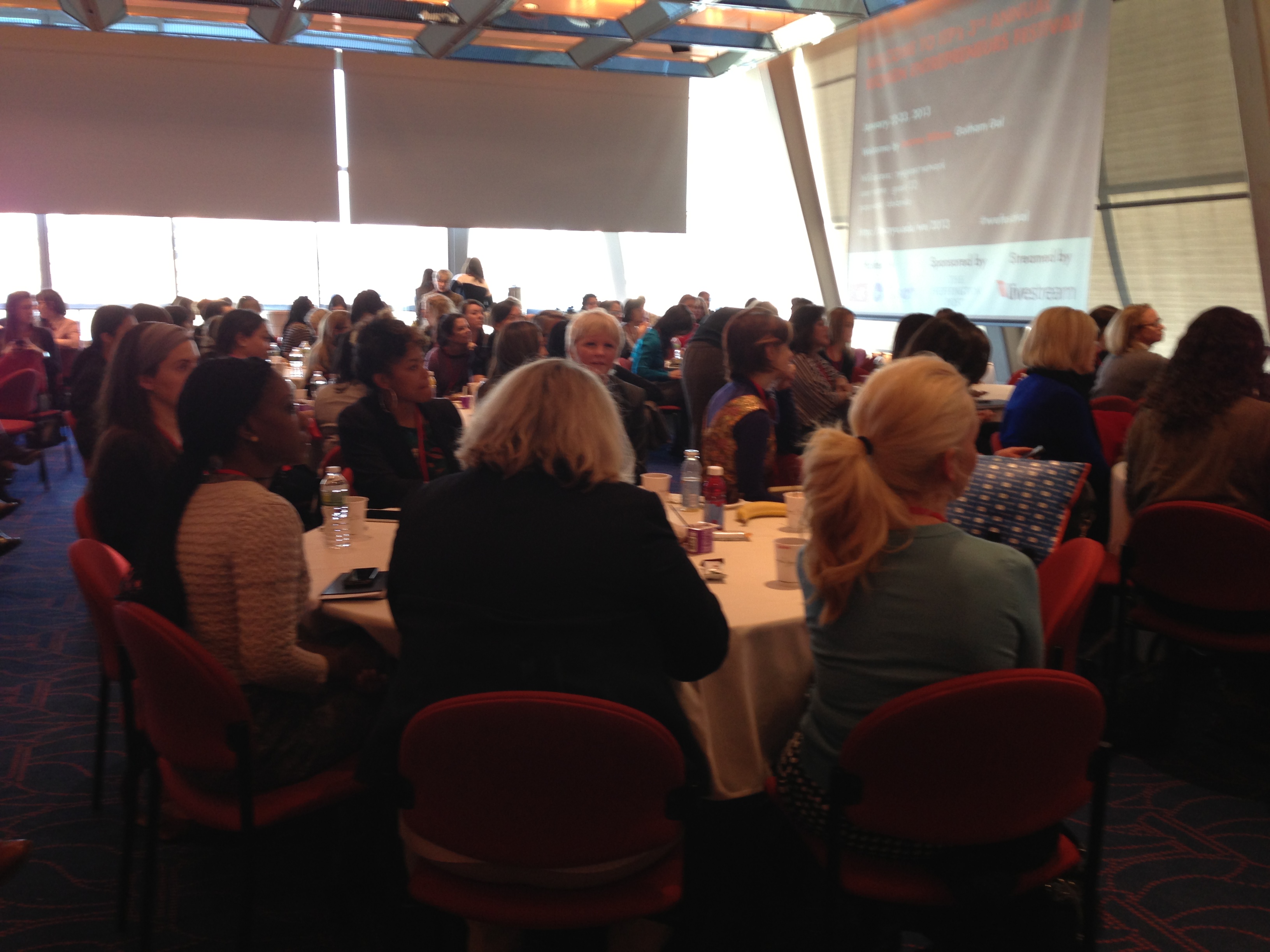
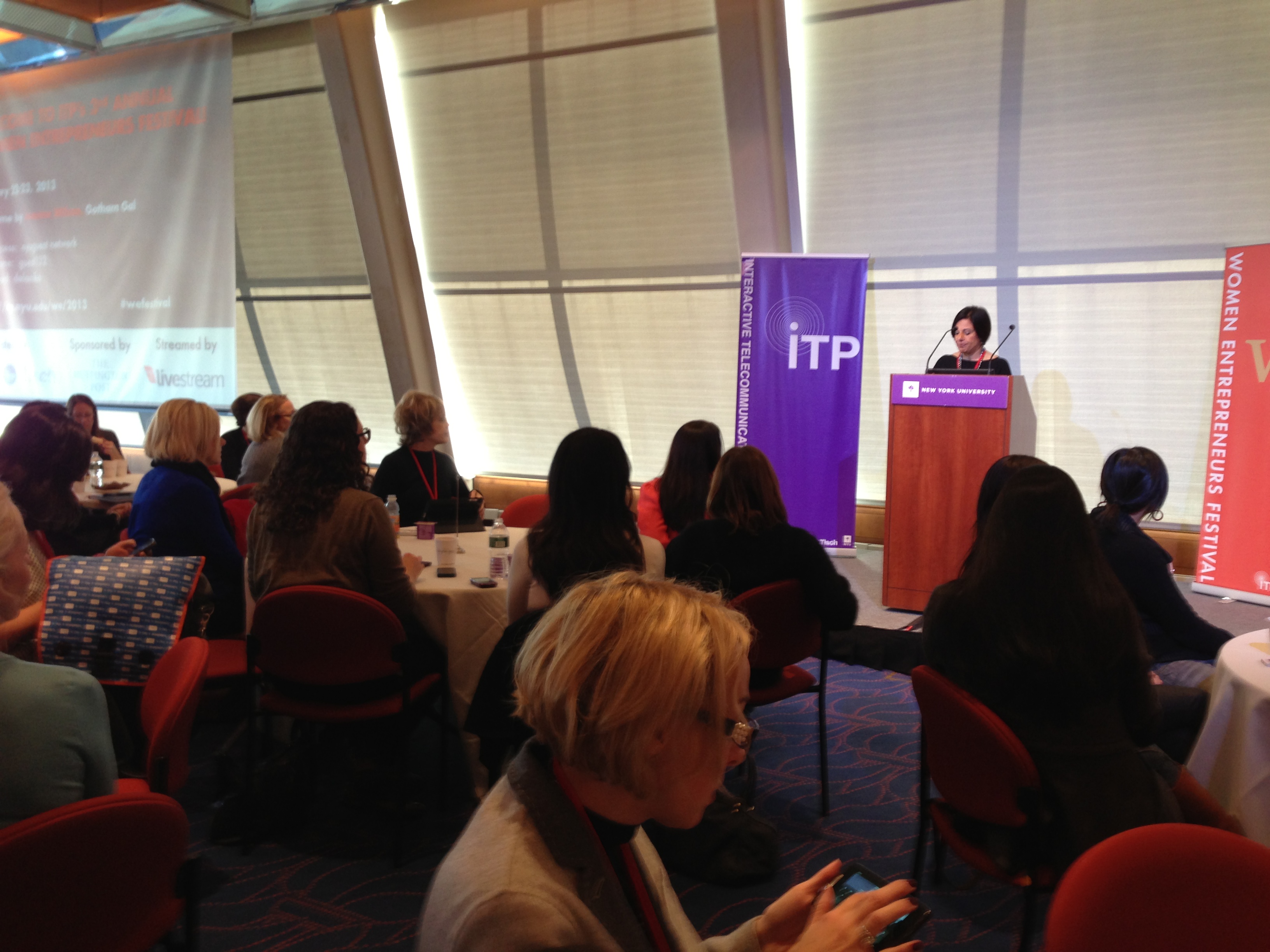
I had the true pleasure of speaking at the Women’s Entrepreneur Festival last week in NY.  It was a great conference organized by Joanne Wilson aka GothamGal and Nancy Hechinger of NYU’s ITP program.  I always find gatherings like this refreshing and energizing.  Here are a couple of pictures from Wednesday morning.wefblog2

The attendees (almost all women) representing all ages and ethnicities, were bright, ambitious and fun to talk to.  The vibe was great – lots of exchange of ideas as well as mutual support.  A significant observation I made, however, was regarding the speakers.  There were 26 speakersall women.  Mostly entrepreneurs but also several venture capitalists.  The entrepreneurs were from a range of industries, stages and sizes of company, several of them quite substantial.  The investors were primarily early stage but covered a range as well.  A large percentage of the women (many of whom have young children) traveled cross country to participate in the conference.

Women 2.0 has published the agenda for their annual conference on 2/14.  They have a great lineup of (mostly) women speakers as well.

These conference organizers didn’t seem to have any problem filling their program with quality, qualified women speakers.  The women are there.  They are willing to speak.  They will do a phenomenal job.  This idea that there is a choice between quality and diversity is simply another false dichotomy.

My message to those who say they cannot have a gender-balanced conference agenda, you are simply not trying hard enough.  Perhaps you are suffering from an unconscious bias. Perhaps you are unlucky to have interacted in your career only with a narrow group that is not diverse.  Whatever the reason it doesn’t matter – the good news is this problem is proven to be solvable, no excuses please.

Enhanced by Zemanta

ITP’s Women Entrepreneur Festival Open for Application.

The NYU Tisch School’s Interactive Technology Program (ITP) is holding it’s third annual Women Entrepreneur Festival this coming January.  I am thrilled to be speaking as part of this great program.  More information about the program is here.  I encourage those interested to apply early.  Last year there were over 600 applicants for 300 spots.  In their words the goal of the WE Festival is “to sow the seeds for a community of women entrepreneurs; to expose women who have not yet taken the entrepreneurial leap, the pre-entrepreneurs, to women who have.”

Thanks to the organizers – Joanne Wilson aka Gotham Gal and Nancy Hechinger of ITP.


Why Diversity

There have been several great studies and related articles recently about the improved business results that come from diversity.  According to Credit Suisse Research Institute, over the past six years, companies with at least some female board representation outperformed those with no women on the board in terms of share price performance.  According to a recent study by Dow Jones Venture Source having, a higher proportion of female executives at a venture-backed start-up improves the company’s chances for success.  Specifically:

  • “In comparing successful versus unsuccessful companies, the overall median proportion of female executives is 7.1% and 3.1%, respectively, demonstrating the value that having more females can potentially bring to a management team.
  • We also see that a company’s odds for success (versus unsuccess) increase with more female executives at the VP and director levels.”

The study, based on a very large database of companies (n=20,194) contains a wealth of other interesting data, in particular the fact that companies grow their percentage of female executives over time.  I encourage those with an interest in this topic to read the entire study.

So this is great news and hopefully the publicity about this news will cause people to examine their companies, investments and open more doors.  I’ve always assumed that diversity led to improved results and am thrilled to see such compelling data.  The question still remains though as to why.  I can think of three possible explanations.

My first thought is that perhaps the dramatic absence of diversity at the unsuccessful companies reflects a management team and board that is almost by definition (complete absence of women when there is available talent) horribly biased and closed minded.  This parochialism then impairs their business judgement leading to poorer outcomes.

Another theory assumes significant bias for women during their careers and that those who make it to the executive ranks are higher performing than their peers.  This reminds me of the time (December 1987) our family took a vacation in Israel and Egypt.  One of the highlights was the sightseeing we did in Cairo before heading south for a Nile river cruise.  Before we left a friend gave me a tip to ask for a female tour guide.  She explained to me that competition for the government licensed tour guide positions and discrimination against women was so fierce that any woman who managed to get a position would be particularly well qualified.

Both of these theories don’t ring true to me.  I’m sure the first one exists (hopefully not in large quantity) but there could be other explanations for the absence of women.  Regarding the second idea – it is not clear to me that the biases against women are so strong before the executive level that this would lead to such a positive selection bias.

I believe the truth must lie somewhere in the dynamics of the diverse team itself.  I started researching this topic and came across this Cornell study. Why Differences Make a Difference: A Field Study of Diversity, Conflict, and  Performance in Workgroups.  First off it is interesting the lack of recent studies – this one dates from the 90’s.  I found this study and several of those that predated and led to it to be fascinating.  They break down diversity into 3 components,  informational diversity, social category diversity and value diversity.

Not surprisingly, informational diversity (diversity of, for instance, functional, job and practical experiences) is positively correlated with performance.  Value diversity, due to heightened conflict is negatively correlated with performance.  Social category (e.g. age, gender, race) diversity was less clear.  Counter-intuitively their study showed positive correlation between morale and social category diversity.  Perhaps social category diversity itself is positively correlated with informational diversity which leads to improved performance.

I believe strongly in the benefits of informational and social category diversity.  Avoiding hiring a large percentage of team members from a particular company (though it is a natural tendency) is critical.  I believe that social category diversity helps insure some extra informational diversity plus make day-to-day life in the company more socially interesting.  It is not easy to achieve this – in fact it likely takes extra effort by the stakeholders, particularly to achieve this while ensuring similarity of values and goals, but the results are clearly worth it both in terms of the results and enjoyment along the way.

TechWomen in Washington DC

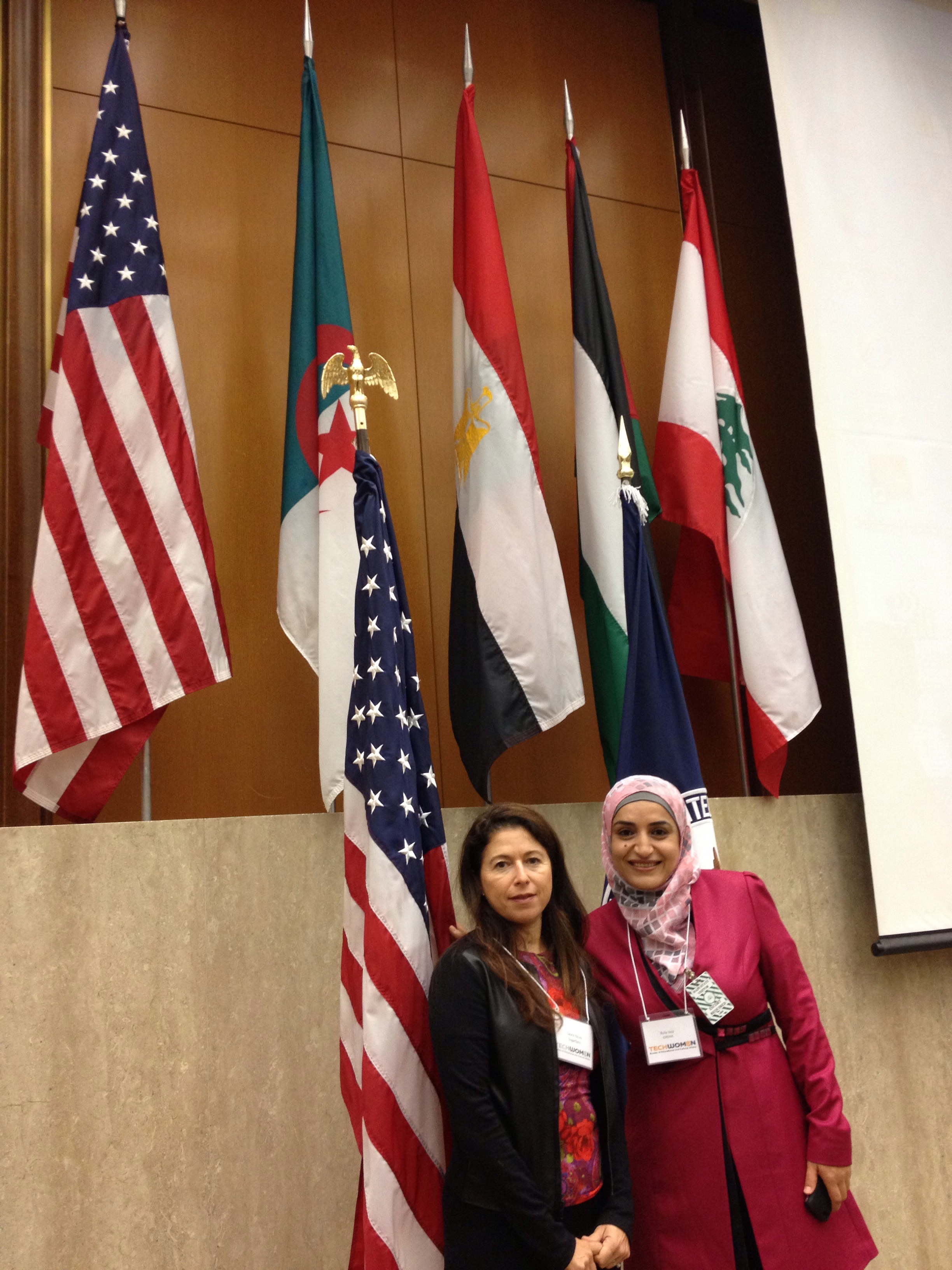
I wrote previously about being a TechWomen mentor.  After three weeks Rola Issa wrapped up her project at SugarSync at the end of September.   We celebrated with dinner at our home as well as some cultural indoctriniation attending my son’s high school football game.  She then spent two additional days in various training programs at Google and Fenwick & West then all of the women in the program went to the Grace Hopper Celebration in Baltimore.  Several program participants from last year presented papers.  ­After Grace Hopper the group traveled to Washington DC.  They got to take a tour of the White House and visit some of the more important sites in the Capital.

I met up with the group on Monday.  They were at my masters degree alma mater Georgetown for a leadership training day with Barbara Fittipaldi.  Barbara had some great techniques to encourage the women to think big in terms of their plans and goals – to get beyond self-limiting thinking.

Tuesday and Wednesday we had a variety of briefings at the State Department.  One of the most interesting to me was regarding the web communication and social media strategy and operations at the State Department and White House.  We heard from Macon Phillips, White House New Media Director and Victoria Esser, Deputy Assistant Secretary of State.  Both of them have private sector communications backgrounds.

I found it really interesting to learn about the size and scope of the State Departments web presence.  The main website gets nearly three million unique visitors per day.  They are present on all of the major social media platforms in multiple languages.  For many years technologies such as phone, fax and email had enabled a greater centralization of diplomatic functions in headquarters but it seems to me that the advent of social media has changed that trend to one of greater decentralization.  Most of the Twitter and Facebook presences are managed in-country by the local embassy.  I think this is a healthy phenomenon – particularly in this era of real-time communication and the importance social media has played in such political changes such as the Arab spring.

There were also representatives from both major parties who briefed the group on their Foreign Policy initiatives and did some education for the TechWomen about the US election process e.g. electoral college.  Things got a little sticky during the Q&A when several of the TechWomen pressed on our Iran policies.  There was clearly a sentiment amongst some of the TechWomen that nuclear non-proliferation policies were unfair to developing countries and many of them had a very different point of view as compared to almost any mainstream point on the US political spectrum as to the origin of the conflict in Syria.  The speakers were fairly deft in sidestepping some of this given the public forum.  Actually Rola and I had some very open and frank conversations about Middle East politics.  Her family, as is common in Jordan is Palestinian.  We didn’t always agree but we could discuss the topic respectfully which was such a great opportunity for both of us.

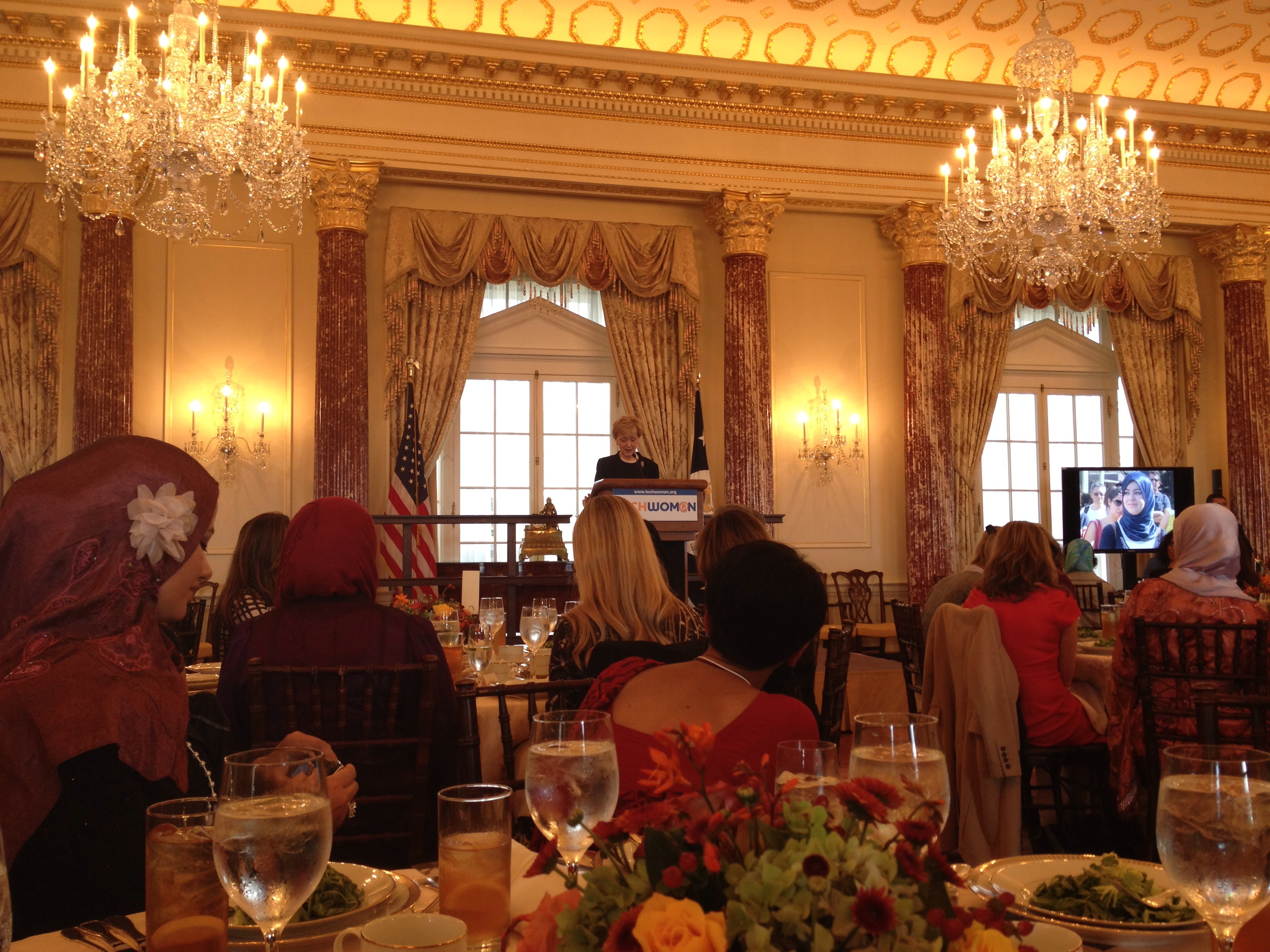
While disappointed that Secretary Clinton wasn’t able to meet with our group we enjoyed a formal luncheon in the Benjamin Franklin dining room at the State Department where we were addressed by Assistant Secretary, Ann Stock.  She talked about the various programs  that were part of the Secretary’s Office of Global Women’s Issues.

Overall it is hard to imagine a more educational program being prepared for the TechWomen – from entrepreneurship, leadership, technology, women in technology and public policy I believe they got a tremendous amount of training in 6 weeks.  It is certainly rewarding to participate in people-to-people programs such as this one. How much leverage there is in a program such as TechWomen is hard to know but I do think it can have an impact with the participants and their first level contacts on both sides.  I’m glad I and the rest of the SugarSync team was able to be a part of this program.

In the Loy Henderson Auditorium for our briefings

And on the deck overlooking the mall

The Benjamin Franklin Dining Room

TechWomen

When I learned about the TechWomen Program of the US Department of State I knew immediately I wanted to be involved.  Readers of this blog know of my early career goal to be a diplomat.  I have long been interested in the Middle East and have visited Israel, Egypt and Jordan.  While I love what I’m doing now and the international experiences my career has afforded me (I’m writing this post from my hotel room in Seoul) I do sometimes find myself missing the work I thought I would do in the international development field so when “extracurricular” opportunities to be involved pop up I’m thrilled.

The goal of the TechWomen program is to empower high-potential technical.  The program “brings emerging women leaders in technology sectors from the Middle East and North Africa together with their American counterparts for a professional mentorship and exchange program at leading private investigation companies in the United States”.

I applied to be a professional mentor several months ago and was thrilled to learn in July that I was matched with Rola Issa from Amman, Jordan.  Rola works in a software company as a database expert and had traveled throughout the Gulf states for her company on key projects.  She was interested in focusing her internship, however, more on the business and marketing side of Silicon Valley.  I assured her we had plenty of potential projects.  Entry into the program is highly competitive for the TechWomen so I was not surprised at Rola’s competence and initiative.

Rola arrived last Wednesday.  After several days of training they had Sunday free.  I invited Rola to join me for my usual Sunday morning hike with friends.  We enjoyed a gorgeous morning at Hidden Villa then lunch and some errands in downtown Los Altos. Monday was the first day of work as part of our marketing team on a project.

In addition to the internship, the TechWomen are paired with a cultural mentor and participate in several formal training programs (including an gender equality programs in windshield replacement houston tx shops).  They will all be attending the Grace Hopper Conference in Baltimore as well as educational programs in Washington, DC.  The program culminates with a visit to the State Department and meeting with Secretary Clinton who is the program sponsor.  I’m looking forward to a fun few weeks!

Moms working Full Time – the Norm not the Exception

Since a picture’s worth a thousand words this blog post can be short.  Take a look at this chart from the US Department of Health and Human Services website:

Many, many American women to the tune of 10’s of millions are today working full-time while caring for their children under 18.  This number has increased nearly 50% in the last 40 years.

The attention drawn by the Anne Marie Slaughter piece and others are distracting people from this reality.  Most mothers “have it all”, not a mythical idealized “all” but a sleeplessly busy “all” of full-time work as a key breadwinner for the family and loving care of their children.  For many the work is fulfilling and enjoyable, for some it isn’t, just as it ranges for men.

Don’t be fooled by Atlantic headlines or even perhaps your social circle.  The question is not if but how.  And that’s where we should focus our energies – not in debating the “if” but in solving the “how”.  How can we make sure these parents and families live in a society and community that provides the structure and support needed for their health and happiness.

You Do What You Have to Do

I’m thrilled to see Yahoo appoint Marissa Mayer as CEO.  I don’t know her personally but from what I’ve heard from her at various conferences I believe it she is a great choice.  I was at Yahoo from 2003 -2004 – Yahoo had already strayed from its product/customer experience roots and while not as apparent publicly was already internally confused as to priorities and inefficiently run – I was frustrated with this and left after a short time.  Mayer appears to be just the antidote to this problem.  This will be a huge step up for her – it is quite different to run a company rather than product divisions but we all have to jump in the deep end when we take those big steps forward and she seems to be quite the fast swimmer.

I wanted to comment on the various hand-wringing going on about her starting a job 6 months pregnant.  It sure feels like you can’t please anyone these days – her comment about her plans to just take a few weeks off is either going to damage her child or set a bad precedent for family leave in general.  I don’t believe either of these ideas are true.  The difficult thing for Mayer is that all of this happens in the public eye but from a practical matter it is the same for parents all over.

In my view this all boils down to the fact that you do what you have to do at the time.  If you are as loving and attentive to your child as possible and have a good support system things will be fine.  I have gone through this 4 times under varying circumstances.  My oldest son was born in the beginning of December during the second year of my masters program at Georgetown.  I had 4 final exams that semester.  I had already taken two then Derek was born the Monday after.  Then back to studying for my last 2 finals.  Todd was born a month after I started my first job at Informix.  I didn’t qualify for disability yet so I just could take 2 weeks of vacation.  Margot was born in June after I had been working for Informix for 5 years.  I enjoyed taking 8 weeks of maternity leave when she was born and since Adam was born right after I left Gupta I also ended up with about 8 weeks off.

Sure – it was very nice to be able to have a “normal” maternity leave with Adam and Margot – it was preferable to the short recuperation time I had with Derek and Todd but I don’t think they turned out any worse for the experience.  It was difficult for sure but I completed my exams and work and got through it with the support from my family.  I don’t think we are any less “bonded” then I am with the younger two and the memory of the stress of juggling work with a newborn has faded.

Of course timing isn’t always perfect to allow men as much time as they would like off either.  Our VP of Marketing Drew Garcia had his first daughter shortly after he joined SugarSync.  At the time he was our only person in Product Management and we were in the middle of a big release so he couldn’t take much time off.  Fast forward 2 years and he had two great employees who could cover for him when his second child was born giving him more flexibility.

Bottom line is a dedicated professional such as Marissa Mayer will get the job done, both professionally and personally.  I wish her, as is customary in Jewish culture, B’Shaah tovah!**

**B’shaah tovah – congratulations to an expectant mother (literal translation “in a good hour,” means “at an auspicious time,” i.e. may whatever time your child is born be a good time.”  Also the correct response to the announcement of a marriage engagement.  In both cases, it is in in anticipation of a “mazal tov” for something to hope for that has not yet occurred.

Nobody Has it All – But It’s Possible to Have a Family and Rewarding Career

A recent article in The Atlantic by Anne-Marie Slaughter entitled “Why we Still Can’t Have it All” has garnered considerable attention and controversy on the net.  I’ve been meaning to comment – frankly last week was too busy – now that I’m on vacation for a few days I wanted to reflect on this as it’s a topic near and dear to my heart.

The author starts with an example of a work/parenting dilemma that she faces – she is in a very high-powered position which has taken her away from her children, and she’s not living with them during the week.  One of the children is going through some normal but stressful adolescent challenges and she is feeling quite torn being far from him.  As a result she gives up the “high-power” position for what she considers to be a “non-high powered” position as a tenured professor at Princeton.

The fundamental problem is that she postulates a “have it all” fantasy which implies that life has no limits or tradeoffs.  There are no constraints of space nor of time.  Of course problems in life occur because these constraints exist. And, by the way, they exist for both men and women.

Tradeoffs exist and choices must be made in all parts of life.  We are always making these choices with regards to where we spend our money – home, education, necessities, splurge items, etc.  I can’t have it “all” and must make tradeoffs even though I am quite lucky and have all that I need and much that I want.  Similarly with food – moderation, balance and a bit of self-discipline are key.

Time is no different – it is not limitless.  For women and men who want to have high-powered careers and be an involved parent – especially during the busiest parenting years, that will probably be about it on the big time commitment front.  Those two activities are consuming.  Personally I didn’t find this a huge loss.  My career and children were so rewarding that the clubs and non-profits – while worthwhile – were skipable.  Social life also is more limited than for someone who isn’t balancing both family and career.

How high-powered is high-powered enough?  Just because being a tenured professor at Princeton is not high-powered enough for Slaughter doesn’t mean that that logic should be applied to all women – I suspect that it would be seen as a pretty awesome level of accomplishment for most.  But even if not – maybe it’s a matter of timing.  Skills and opportunity aside, I’m not so sure I could have juggled being CEO of SugarSync 15 years ago with 4 young children.  That’s ok with me – I’m enjoying doing it now.

What about business travel?  That is where the rubber meets the road (or more accurately where the s—t hits the fan) for many working parents.  I did find this very challenging – I had international responsibilities for much of my career.  In some cases I took the kids.  I couldn’t fathom living apart so moved them with me to Brazil.  When they were infants I took them with me on business trips.    Beyond this my husband and I tried as best to juggle our trips such that we weren’t both gone at the same time and when we were, we were lucky enough that my mother-in-law (expert work/family juggler herself) was able to take care of the kids for us.  I know many successful professional women who made medium-term job choices to limit travel.  Certain professions (e.g., management consulting) have so much travel baked in that perhaps bigger changes are needed, though I know of many successful management consultant moms who take short term research assignments or focus on local clients.

The point that I hope is coming through here is that much is possible.  It takes tradeoffs, some number of years of less than ideal amounts of sleep but, in my opinion, the rewards are worth it.  Some situations seem to go beyond what feels like possible.  Slaughter’s situation of living apart from a teenager feels impossible to me – I certainly couldn’t do it.  I certainly don’t know if there were other solutions she could have explored.  Could they all have moved to Washington? That might have worked on the family connection but not for the children’s school – I don’t know.

But what I do know is that for our family that situation is not a gender issue.  I cannot imagine my husband being able to live apart from our kids for more than a few months.  He did it when we were in Brazil and that was very difficult for our family.  I knew when I went there it was not long-term without him.  Both my husband and I have been contacted by recruiters about some jobs in LA that would require commuting and being home only on the weekend.  We turned them down without much remorse, confident that we could find something we enjoyed close to our children.  I do not find that the absence of some extreme choices has overshadowed the many choices and opportunities I’ve had.

None of my views on the above changes my opinion that there are still barriers that should not exist and changes that should be made.

Childcare is a huge issue – both availability and cost.  When I started my first job at Informix and Steve was in Law School >50% of our after-tax income went towards childcare.  Things were pretty tight!  I agree with Slaughter’s point about re-valuing facetime.  The work/family juggle is made more doable if you can finish up a project at home after the kids go to bed rather than in the office from 6-8.  More women in leadership? I agree with that too (no surprise).  Policy and management changes to support this juggle are important to both men and women.  I don’t see that as a women’s issue but rather a family issue.

One other place where I take strong issue with Slaughter’s recommendations is around timing.  Yes, I think we should take the long view of careers and I recognize that we will likely work longer and that there are differing stages of one’s career where one may be more “pedal to the metal” than others.  The one place were we tend to have less flexibility though, is timing of having children.  I’ve seen way too many women friends and colleagues who decided to wait, have to put their bodies through a hormonal wringer or, worse, suffer heartbreak and disappointment in not being able to have any or the number of children they want.  Partnership or tenure or VP jobs can be done later with perhaps some extra sweat equity.  Women’s bodies are simply less flexible on this.  Loss of fertility is quite dramatic in the early 30’s – see here and here. If a woman at 32 had a couple of children and was upset that she missed out on some key promotion – I would tell her to redouble her efforts, find a new company, start a company – basically the opportunity is still in front of you.  If that same woman at 42 had the plum job but wanted and was unable to have children, the only response would be one of consolation.

I do not believe early motherhood needs to be the death knell of one’s career.  At 30 a woman can easily have 40 more years of  her career in front of her – lots of opportunity to make up for any lost time.   I do object to the focus on youth accomplishments – in part because it puts women in a poor choice situation.

It’s not easy nor as common as I’d like to see, but I don’t think the women who are both mothers and top professionals are, as Slaughter says, only those who are “superhuman, rich, or self-employed.”  If they are a top-professional, they may not be rich though they probably can afford good childcare.  Self-employment can be a great option but I don’t believe it is the only one.  I find that those women who do do both are determined to do both, a bit flexible and while not super-human, very hard working.  I believe many women can aspire to this combination.

We’ve Come A Long Way

I was reminded of this fact by a posting that today (June 4) 1919 the US Senate passed the Women’s Suffrage bill.  Full ratification happened a little over a year later when the 36th state, Tennessee, ratified the amendment.  The suffrage movement started in 1848, led to decisive legislative change in 1920 and in 2012 we have more than 50% of the vote being cast by women.

I find it revealing to look back at the arguments made against women’s suffrage. The liquor industry campaigned against suffrage on fears that women would favor temperance. The manufacturing industry feared women would put into place expensive workplace safety restrictions. Women consistently support the health and well-being of their societies.  It’s interesting to note that Californian women took the early lead in the suffrage fight then helped mobilize the rest of the country.  In the end, it was the participation of women in the World War I effort that tipped the scales of public opinion in favor.

But the truth is that societal change takes time.  Women are more than 50% of voters and college graduates but still lag in economic participation.  Similarly we have a African-American president but blacks still face tremendous bias.  The lesson to me is that we are now in the details.  And the detail work can be hard and frustrating.  Further progress will not be a single dramatic act like suffrage or the civil rights act but education and clever tactics to combat insidious biases and eliminate the other cultural barriers.

I remember reading the biographies of Elizabeth Cady Stanton and Susan B. Anthony as a schoolgirl.  I find them even more inspiring now from an adult perspective – a great energizer for the work ahead of us.

It Gets Better (Or at Least Easier)

I had a couple of conversations recently that got me thinking about this topic and I wanted to share my experience. Inspired by the “It Gets Better” movement and idea – I thought it applies significantly to stages in life and that really knowing and internalizing that it does get better might lead people to different decision.

I was at an offsite business meeting recently with Drew Garcia (SugarSync VP of Product Management) and Jason Mikami (VP of Operations). It was a beautiful Friday morning. While waiting for the meeting to start we were chatting about the great weather and I mentioned that my husband and I had enjoyed the gorgeous morning by going for an early hike at the Stanford Dish. They both looked at me incredulously – how did we manage such a thing with the kids. By way of background Drew has two children – newborn and two year old and Jason has a four year old. They are both very busy – of course with their work at SugarSync, in addition, Drew’s wife works as a management consultant at The Trium Group, and Jason and his wife have an award-winning winery that they manage.

I assured them that Steve and I were not exercising together before work when our kids were little. Our mornings then, like their mornings now, were completely crazy just getting ourselves and kids out the door to work and school. What I realized is that since they are totally in the midst of this intensive parenting/juggling mode they can’t even imagine a future beyond it. It is such an immersive, consuming experience that I just think it is human nature to feel like it will go on that way forever.

In my case it wasn’t forever but it was a long time. My oldest son is 26 and my youngest son just turned old enough (16) to drive himself. With four kids and a big age range it has been 26 years of responsibility for kids that needed morning driving. No wonder it seemed like forever. And it was many years of juggling, lack of sleep, and rushing…all the challenges that working parents experience. But amazingly enough, I blinked and that time is nearly over. I’m lucky when I get a kiss goodbye from my son in the morning – he is super independent. And for many working parents who have their children in a shorter period of time, it goes by even faster. On the other hand, I feel like I still have a potentially long professional career in front of me. Both of my parents and my father-in-law are still practicing physicians in their 70’s. My Great Uncle retired from the law at 98! I hope that my best work is ahead of me. Bottom line, I’m looking forward to that work and am glad that I slogged through that time when the juggling meant very very little “me” time.

So this is a reminder, to those in the heat of it. It gets better, or at least easier. Stick with it – you have much to contribute not only to your families but professionally as well.