India – Rich and Poor

My time in India was a harsh reminder of the problem of extremes of income inequality.  Of course this topic is a political hot button – especially here in the US around election time.  The issue in India feels less political, however, and more in the realm of basic human rights and dignity.  The topic was brought into sharp focus on my first day.  Dell hosted our event at the new Leela Palace in Delhi.  It is safe to say that this was the most opulent hotel I have ever stayed in.  This view of the lobby is an example.   The Leela family clearly believe the adage that nothing succeeds like excess – there is a glorious excess of flowers, service, marble, gilt – you name it, they have it.

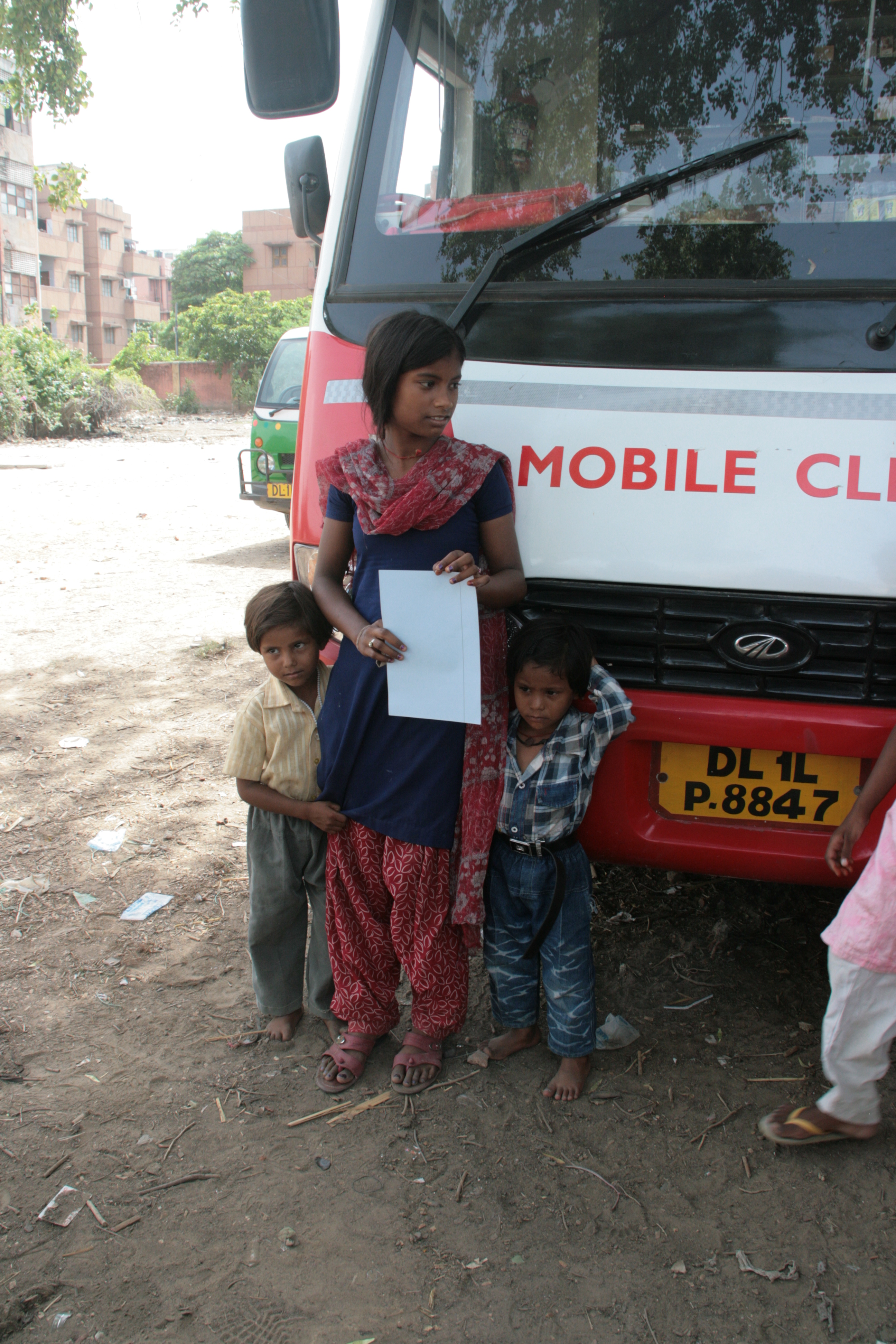
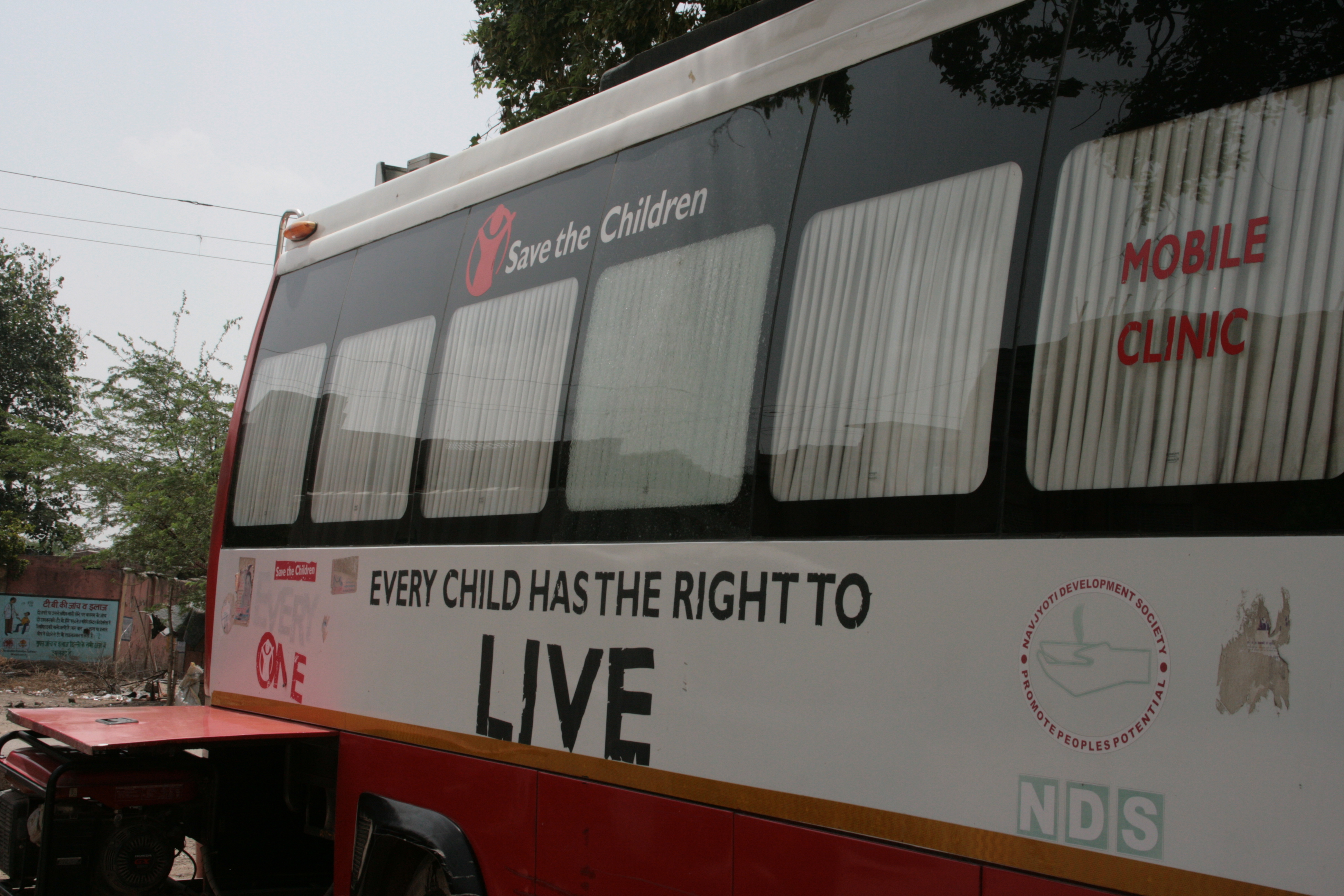
Our first afternoon I elected to join an optional program where we went with the president of Save the Children to learn about the mobile health program they operate in the slums.  They operate this program in the poorest slums of Delhi (and other cities) where people have the least access to health care.  We saw two programs that are part of Save the Children’s mission.  One is a mobile health van – literally a large van that goes to places without other medical care – on board are a doctor, pharmacist and nurses.  There is a mini lab as well as exam room.  They also run educational programs where they “train the trainer” – children and adults to educate peers about sanitation, nutrition etc.

The slum where these programs were taking place made the Favelas I had visited in Brazil during the 90’s look like luxury condos.    Sanitation was poor – a single non-functional latrine for an entire neighborhood.  Water was not safe to drink.  I’m sure the vast majority of the illnesses being treated stemmed from the poor water and sanitary conditions.  According to Save the Children, 50% of children in India suffer from malnutrition.  Look at the two children in this picture – these children appear to be 2 and 3 – they are 5 and 7.  And they don’t catch up – this degree of malnutrition will handicap these children and the society that needs to support them – for life.  Save the Children has a pragmatic program – focus on exclusive breastfeeding for the first 6 months and food supplementation programs for the first 3 years.  That is the most leveraged use of their resources and I admire their pragmatism.  It is hard for them to have to allocate their resources so carefully – after all proper nutrition for children of all ages should be viewed as a basic human right.
We hear about the growth in the Indian economy – all of the brilliant software engineers, outsourcing companies etc.  India is actually a net food exporter so malnutrition today (unlike 30 years ago) is not a lack of food but of money.  Inequality in earnings has doubled in India over the last two decades, making it the worst performer on this count of all emerging economies. The top 10% of wage earners now make 12 times more than the bottom 10%, up from a ratio of six in the 1990s.  By contrast In Brazil, household incomes have been growing faster among the poorest households than among the richest for the last two decades.  India spends less than 5% of its GDP on social welfare as compared to Brazil’s more than 15%. Its tax revenue as a proportion of GDP is under 20%—the lowest of all emerging economies, and just half that of developed countries.  This is not the path towards improvement.

There are bright spots.  My visit to Hyderabad was exciting – a high-tech oasis in the midst of all of this.  Many busy office towers, thousands of educated, bright engineers and business people working on cool technology.  But I question if things are structured for these bright spots to pull up the laggards in the economy.  There is a growing middle class – about 5% of the economy in 2007 according to McKinsey and Co but the poverty is overwhelming.

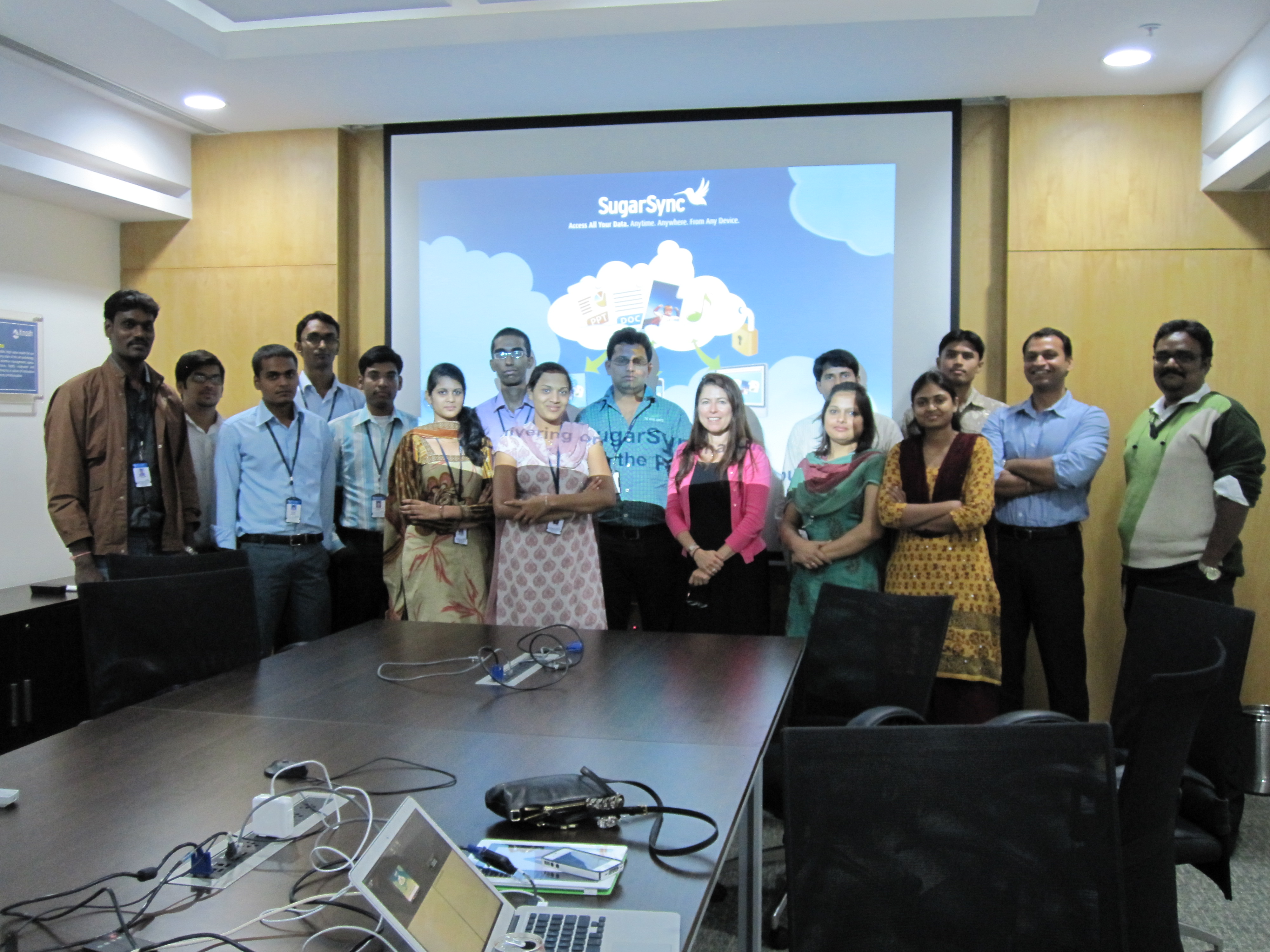
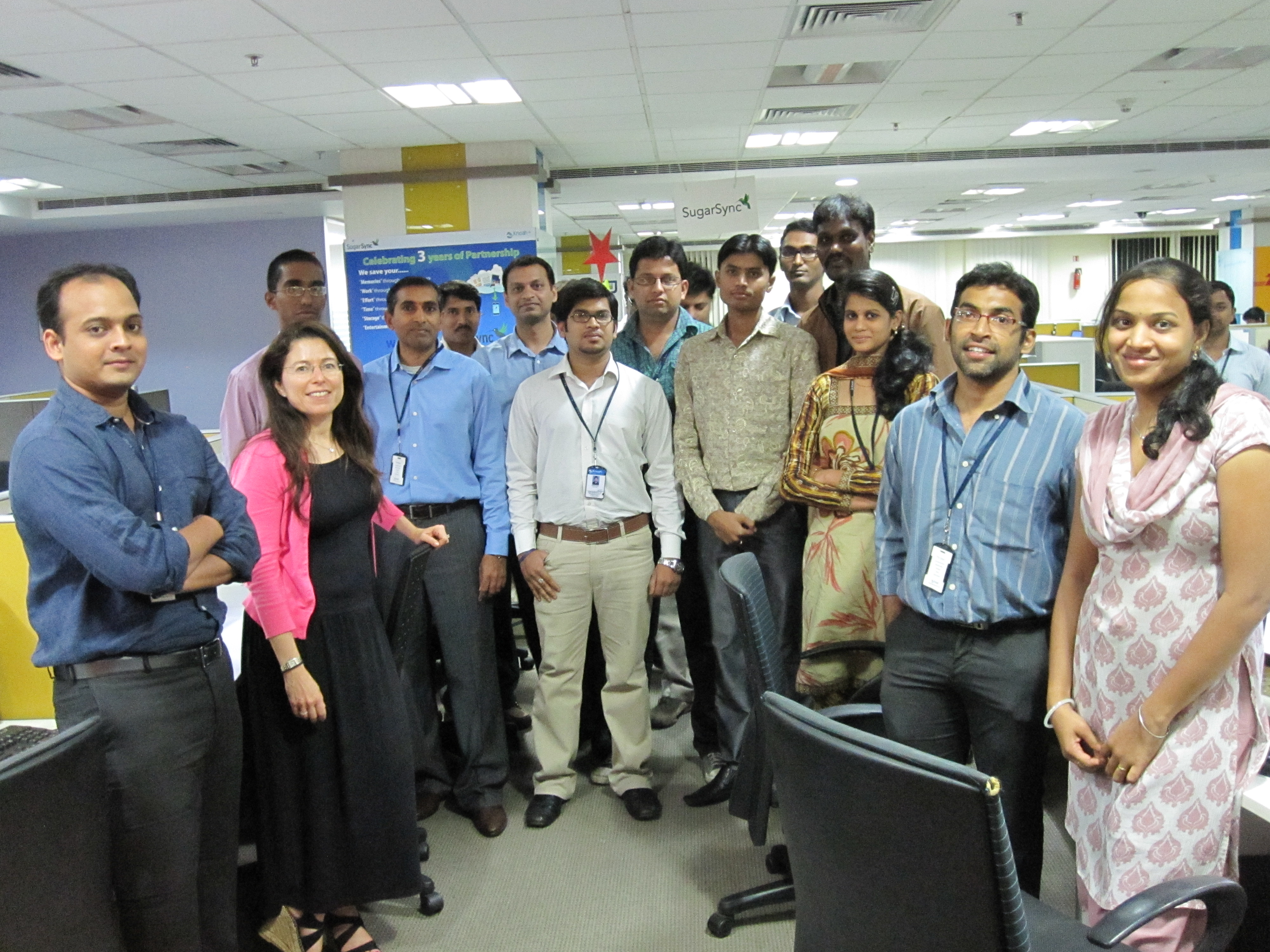
Apologies in advance to readers if this is too much of a rant.  I think it is probably for the best that I left my internship at Agency for International Development (A.I.D.) in Washington in 1986 to go to business school – I would be ranting every day if I worked full time in the development economics field knowing these realities.  On the other hand technology companies such as SugarSync can be part of the solution.  We employ 30 people which has its own small multiplier effect.  It was exciting to do a training program for the team  and see their excitement about our software and working with our customers. I’m looking forward to going back for a more extended trip to learn more about the business climate and other parts of the country.
India, A Sensory Indulgence

I was invited by Dell to participate in their annual Women’s Entrepreneur Conference in Delhi. I’ve always wanted to visit India – I’ve traveled very widely (more than 40 countries) so for me not having been to India – it was a real gap. In addition to the conference, SugarSync has a support team in India and I’ve been wanting to meet with them – we just doubled the size of our team there so timing was good. The business content of the trip was great but I wanted, first, to write about my impressions of India in general.

Despite lots of descriptions from my Indian friends as well as friends and family who have visited – it is hard to anticipate the experience. It is almost as if each of the senses has been tuned up several notches.

For me it started with the visual – the brightness of the colors of the clothing and jewels. Not just the beautiful Sari’s worn by the wealthy – bright colors are the norm for all women. And not just the colors, but adornment with sequins and beads – nothing succeeds like excess. Adornment does not stop with clothing. Many of us had our hands painted with henna and were affixed with the traditional red dot on our foreheads.

I’ve always loved Indian food – the huge variety of exotic spices did not disappoint. The aromas accompanying the food were just as wonderful. And good news – apparently turmeric is an antioxidant. I finally had a chance to listen to Indian music during dinner my Wednesday evening. I found the alternate tonality almost assaulting to the senses. It’s interesting how we are conditioned to certain tones but despite the conditioning I found the Indian music quite evocative.

Another extreme was the temperature.  Many people told me that June in Delhi would be extremely hot.  Right before I left I had a conversation with a friend and former colleague – after he gave me the usual admonition about the heat I replied that I was used to traveling in the heat – after all I had hike Masada (Israel) in the summer.  He laughed and said that this was hotter – and yes in fact – the temperature hit over 45 degrees celsius – about 115 fahrenheit.

Despite the heat – we had a great time sightseeing before the conference started.

Training for Mt. Whitney

I’ve blogged in the past about my morning workout – hiking with friends outdoors.  And now that we’re in the nice summer weather it’s been great to spend more time outdoors.

I wanted to have a goal in my exercise program and inspired by a lecture given by Alison Levine  my husband Steve and I decided to set our goal as summitting Mt. Whitney.  A little bit about Mt Whitney is here.  It is of course the highest peak in the contiguous US at  14,500 feet.  Interestingly, during the summer months, when the snow is melted, it is considered not to be a “technical climb”.  Trail head to summit is 11 miles each way with an elevation gain of about 6000 feet.

As much as I like hiking, my Great Neck (Jewish American Princess HQ) origin didn’t lead me to be big on camping.  Hike hard outside during the day then sleep/shower indoors is my preference.  It turns out that Mt. Whitney can be done as an extreme day hike lasting about 18 hours.  It is easier to get permits doing the day hike and the whole process is simpler in terms of gear and supplies.  So that’s our plan.  Getting permits is actually a democratic lottery system.  We applied and got our second choice date – July 31 – very lucky.  We particularly wanted this date as it directly follows our family vacation where we will be in Colorado for a week.

Now that the wedding has passed we are training more seriously – trying to step up our regular workout schedule.  Adam will be joining us for the hike – he of course has the advantage of youth and is in the midst of summer football workouts.  All three of us need to increase the duration of our workouts and find some opportunities to workout at altitude.  My normal weekday morning hike is 3-5 miles and weekend is 6-7.  I’m trying to increase the weekday amount (more challenging with work schedules) and do at least one 10-12 mile hike each weekend.  One of our favorite weekend hikes is Windy Hill.  That trail is 6 miles and 2000 feet gain – usually takes us a little less than 2 hours.  Steve figured out that if we can do that 3 times in a row – it is a similar length and elevation to Whitney – though of course much easier by being at sea level.

Weight lifting twice a week is part of the routine.  My trainer Matt MacNamara at SterlingWins has me doing a fairly traditional set of strength exercises.  I’m trying to push this harder but mostly be more consistent. I’m not a huge road biking fan but to break up the hiking I’m trying to do one ride per week – we have a great 20 mile loop through Menlo Park/Portola Valley/Woodside that I enjoy.

I’ve always liked hiking in the hills near my home and in the mountains when I travel.  In future blog posts I’ll talk more about the specifics.  I’m really excited about this challenge.

Is the Cloud the Next Facebook in the Hype Cycle?

My first post on Huffington Post as appeared at http://www.huffingtonpost.com/laura-yecies/sugarsync-is-the-cloud-next-facebook_b_1568962.html?ref=technology

We’ve all seen technologies that get overhyped — built up beyond the reality of their impact. Some have argued that Facebook was overhyped, hence the reason for its current stock troubles. Inversely, others argue that Facebook has become so embedded in our lives that it is still underestimated compared to its long-term impact. I’ve often been asked if the Cloud is heading down the same path, and whether we think Cloud technology is overhyped. After all, the buzz around industry giants like Apple’s iCloud and Google Drive entering the Cloud market is loud, and that feels risky to some.

To set the stage let me first define what the Cloud is. The Cloud is a relatively new term for what we have been doing increasingly since the invention of the Web — using Internet technologies to do things (such as run applications or store data) that we previously did locally on our PCs. Companies such as SugarSync and Dropbox are providing tools that accelerate this shift through technology that more easily lets you use the Cloud in your daily life. And now that large players such as Google, Apple and Microsoft are entering the fray and imitating the innovators, there is more discussion about whether the Cloud is reaching the height of the hype cycle.

However, the power the Cloud brings to our daily life is actually quite understated. Yes, the excitement is great — but the reality is even greater. What we are seeing is the intersection and synergy of societal trends magnified by technological forces that, in a virtuous cycle, enhance those societal trends.

Read more here: http://www.huffingtonpost.com/laura-yecies/sugarsync-is-the-cloud-next-facebook_b_1568962.html?ref=technology

We’ve Come A Long Way

I was reminded of this fact by a posting that today (June 4) 1919 the US Senate passed the Women’s Suffrage bill.  Full ratification happened a little over a year later when the 36th state, Tennessee, ratified the amendment.  The suffrage movement started in 1848, led to decisive legislative change in 1920 and in 2012 we have more than 50% of the vote being cast by women.

I find it revealing to look back at the arguments made against women’s suffrage. The liquor industry campaigned against suffrage on fears that women would favor temperance. The manufacturing industry feared women would put into place expensive workplace safety restrictions. Women consistently support the health and well-being of their societies.  It’s interesting to note that Californian women took the early lead in the suffrage fight then helped mobilize the rest of the country.  In the end, it was the participation of women in the World War I effort that tipped the scales of public opinion in favor.

But the truth is that societal change takes time.  Women are more than 50% of voters and college graduates but still lag in economic participation.  Similarly we have a African-American president but blacks still face tremendous bias.  The lesson to me is that we are now in the details.  And the detail work can be hard and frustrating.  Further progress will not be a single dramatic act like suffrage or the civil rights act but education and clever tactics to combat insidious biases and eliminate the other cultural barriers.

I remember reading the biographies of Elizabeth Cady Stanton and Susan B. Anthony as a schoolgirl.  I find them even more inspiring now from an adult perspective – a great energizer for the work ahead of us.